About
Physicist, learning designer and the first Chief Learning Officer at San Francisco Bay University.
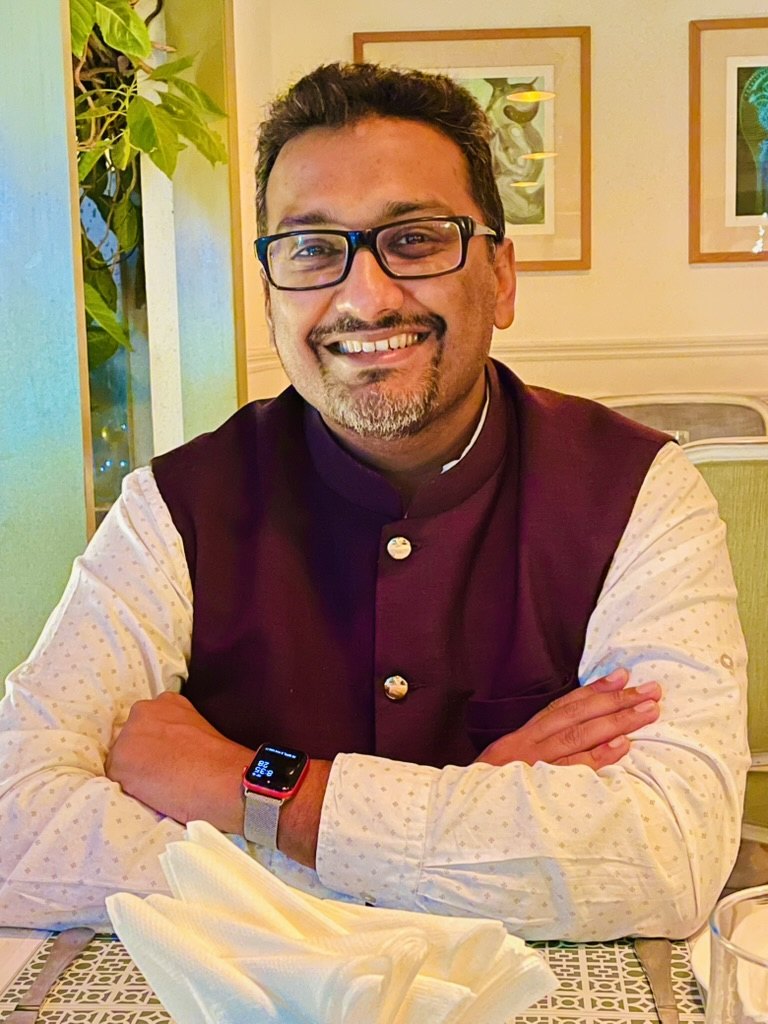
Who I Am
Originally trained as an experimental physicist, I later had the unique opportunity to help create Pakistan’s first liberal arts and sciences university, Habib University, as a founding faculty member. There, I founded the interdisciplinary Integrated Sciences and Mathematics program, co-founded the Center for Transdisciplinarity, Design and Innovation, and later served as the founding Associate Dean for Teaching and Learning. Much of my work focused on rethinking curriculum, faculty development, learning experiences, and institutional systems in response to the changing realities of higher education.
Today, I serve as the first Chief Learning Officer at San Francisco Bay University, where my work spans AI-integrated learning, faculty development, curriculum redesign, and the design of more human-centered educational systems. At SFBU, I have helped shape a new transdisciplinary general education model built around ten “How To” courses designed to make the hidden curriculum more visible and intentionally develop durable human capabilities often valued but rarely made explicit within higher education.
Much of this work explores how higher education can respond more honestly to changing technological and human realities through trauma-informed teaching, neurodivergence, culturally sustaining practices, metacognitive learning, authentic assessment, relationship-rich pedagogy, and new forms of AI-supported learning experiences.
Across these different roles and institutions, a recurring theme in my work has been the belief that education must move beyond rigid disciplinary boundaries, static content delivery, and industrial-era assumptions about learning. This site brings together some of those ongoing explorations through courses, workshops, public conversations, writing, and educational experiments centered around learning, creativity, systems thinking, institutional transformation, and the evolving relationship between humans and intelligent technologies.
How I Think About Learning
This photograph is from a class at SFBU, taken during a group activity. Select a marker to read one of the ideas behind the way I design a class, with a link to the full framework.
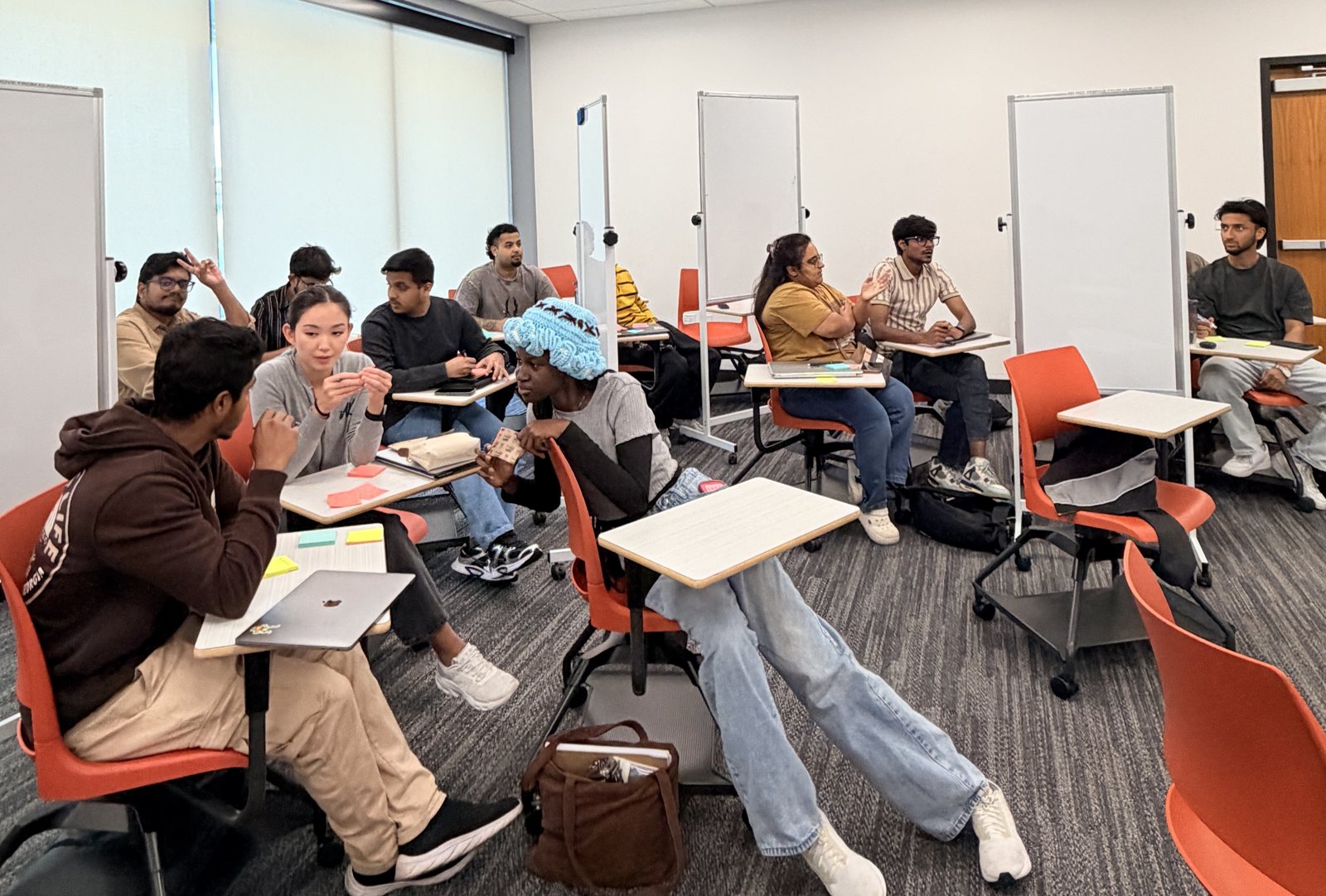
I design activities that students cannot finish alone. I plan for relationships the way I plan for content.
Relational intelligence →Students take in an idea, work with it, then make something new with it. Sticky notes are often the first step: ideas written down so a group can sort and test them.
Think / Do / Create →Students have AI on their laptops. They begin with what AI produces, then do the human work: decode it, judge it, shape it and make it their own.
The Pyramid After AI →A student has to feel safe before they can connect with others, and connect before they can think hard. In my classes, predictable structure comes first.
Regulate, Relate, Reason →Students do most of the talking. My job is to set up the question and listen for where their reasoning needs help.
PERS →The chairs roll and the whiteboards are on wheels, so students can rearrange the room when the activity changes. I learned to design for this at The Playground.
The Playground →
CV
My CV lists my education, appointments, publications and talks. It was last updated in July 2026.