Roots & Branches
Each August I run a three-day institute where SFBU faculty redesign a course they are about to teach.
Why I Built It
Most faculty development on AI consists of presentations about change. When I designed Roots & Branches, I wanted faculty to make the changes themselves. For three days they work on their own courses, and they test each piece with a colleague before they leave.
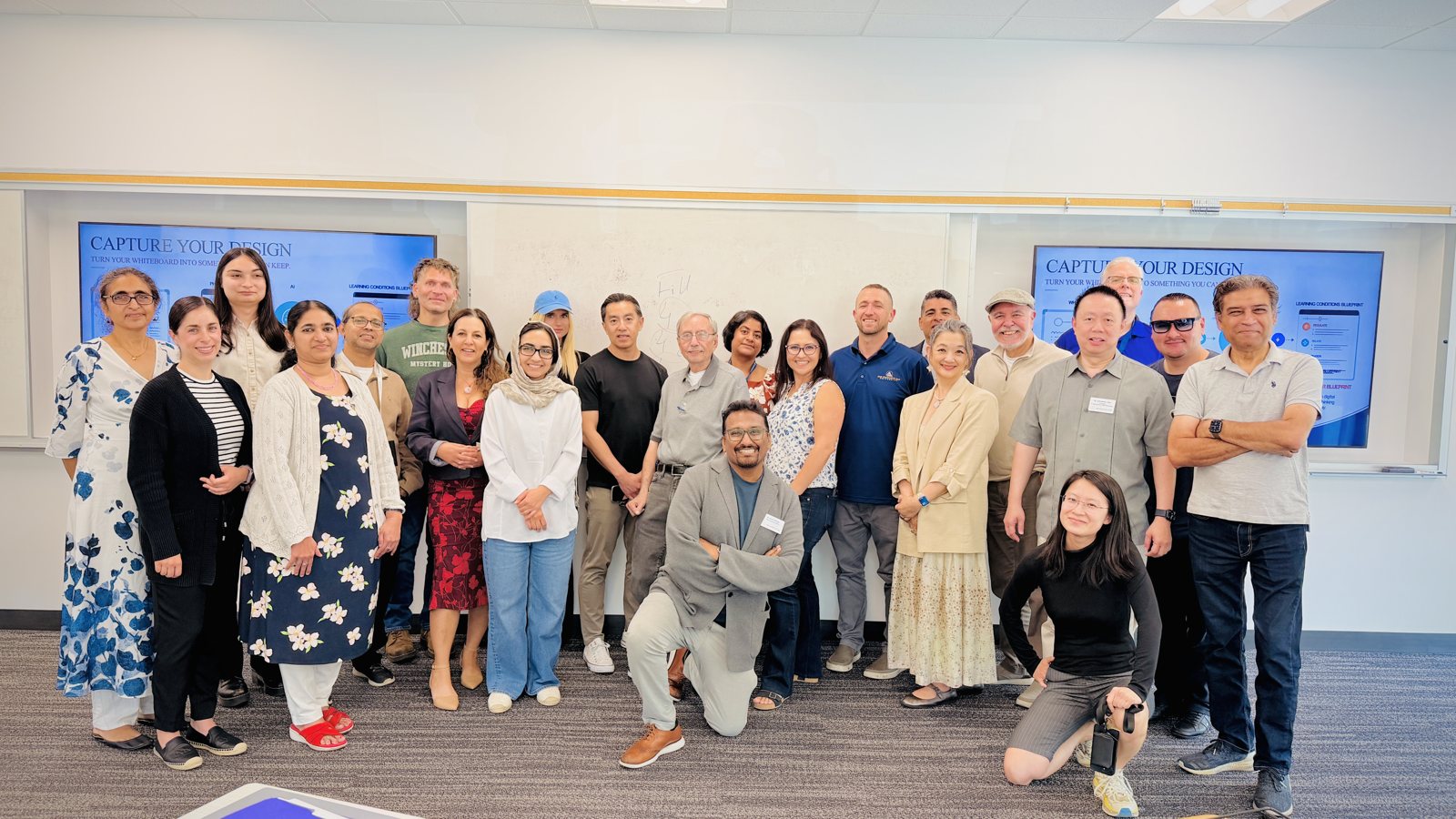
The institute runs in the week before the fall term. Each day has one design question, and faculty finish every workshop with a piece of a real course. I lead the sessions on Think / Do / Create, the Pyramid After AI and relational intelligence. Colleagues from CEPI and SFBU faculty lead the others. The second edition, in August 2026, had 32 participants, including colleagues from Evergreen Valley College, Harvard and a language institute.
Three Days, Three Questions
Designing Learning
How do we design learning?
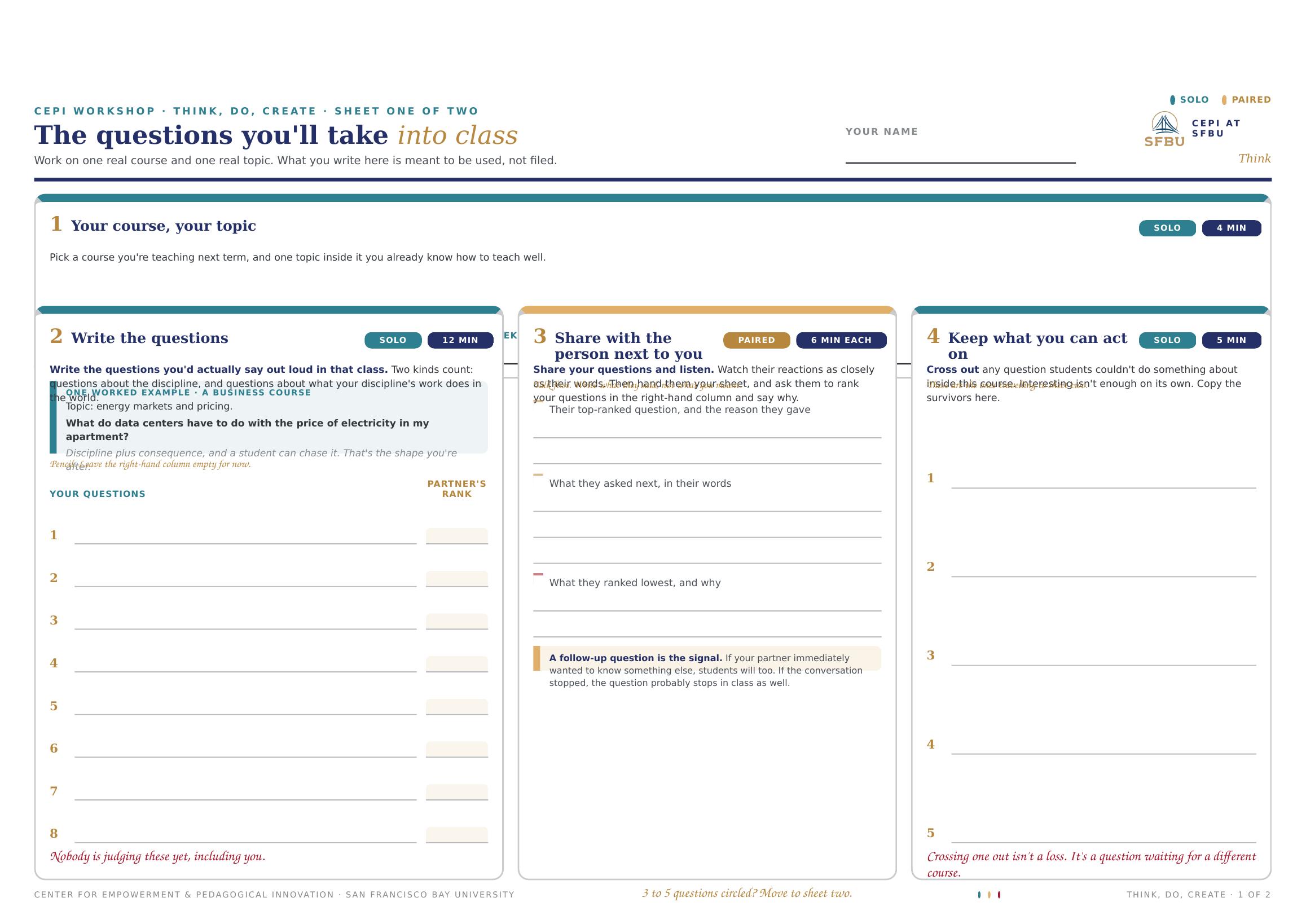
- Think / Do / Create
- UDL Studio
Teaching in the Age of AI
What changes because of AI?
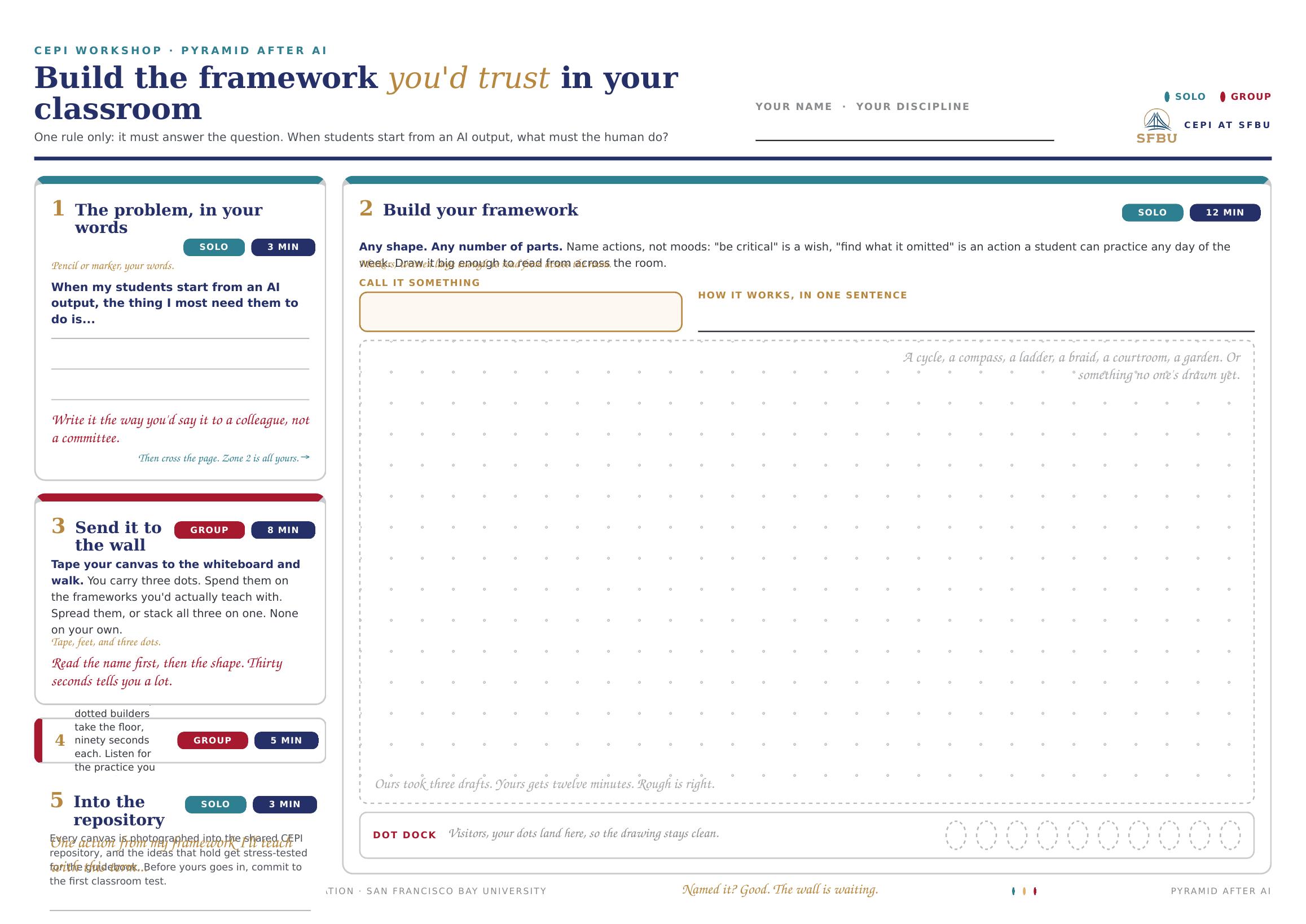
- Pyramid After AI
- Assessment Design
- The TILT Tool Box
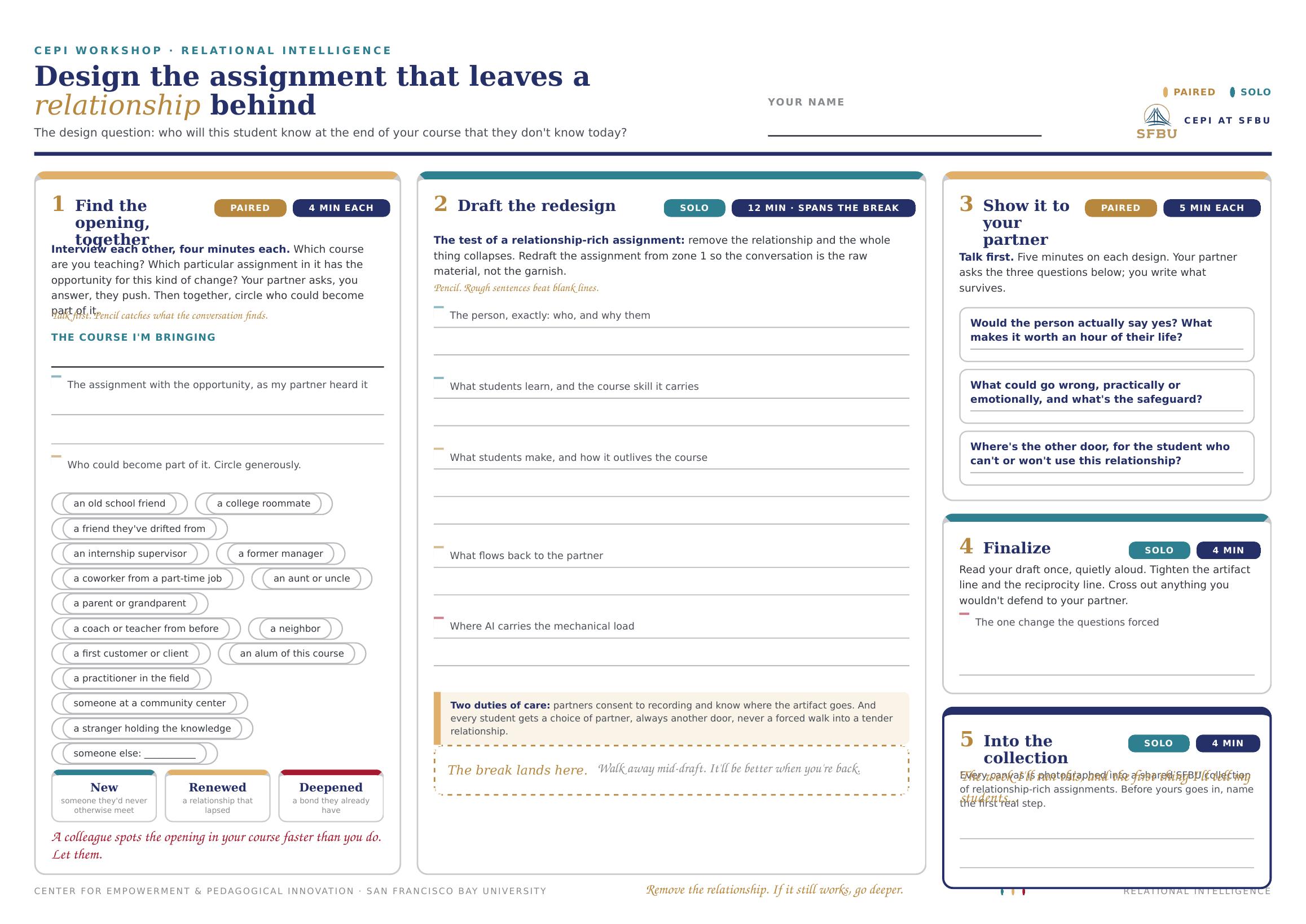
Relational Intelligence
What becomes more important?
- Relationship Mapping
- Relationship Ideation
- Conditions for Learning
Samples of the Work
Below are three of the worksheets. Faculty finish each one with something they can use in class the following week.
What Faculty Take Away
State why the work matters.
Ask students to show their thinking along with the product.
Give feedback before the final deadline.
Offer prompts, choices and a backup partner.
Require judgment, voice and choice.
What Comes Next
When we read through everything participants made in 2026, we found the same five ideas in very different disciplines. Students need to know why the work matters. Choice and lived experience increase their effort. Their reasoning has to be visible. They learn in cycles of feedback and revision, and the goal is transfer to a new problem.
Evergreen Valley College has since invited CEPI to run a workshop for its faculty in January 2027. We plan to open the third edition at SFBU to a larger regional community, with students joining as co-designers. If you would like to run something similar at your institution, write to me.
To bring a version of the institute to your campus, write to me at anzar.khaliq@sfbu.edu.