The Pyramid After AI
What should students still do themselves once AI can produce the first draft?
For most of the last century, a finished essay or a correct answer was reasonable evidence that a student had done the thinking. Generative AI has broken that link. A student can now hand in a fluent, well-structured piece of work in minutes. A teacher can learn very little from it about what the student understands.
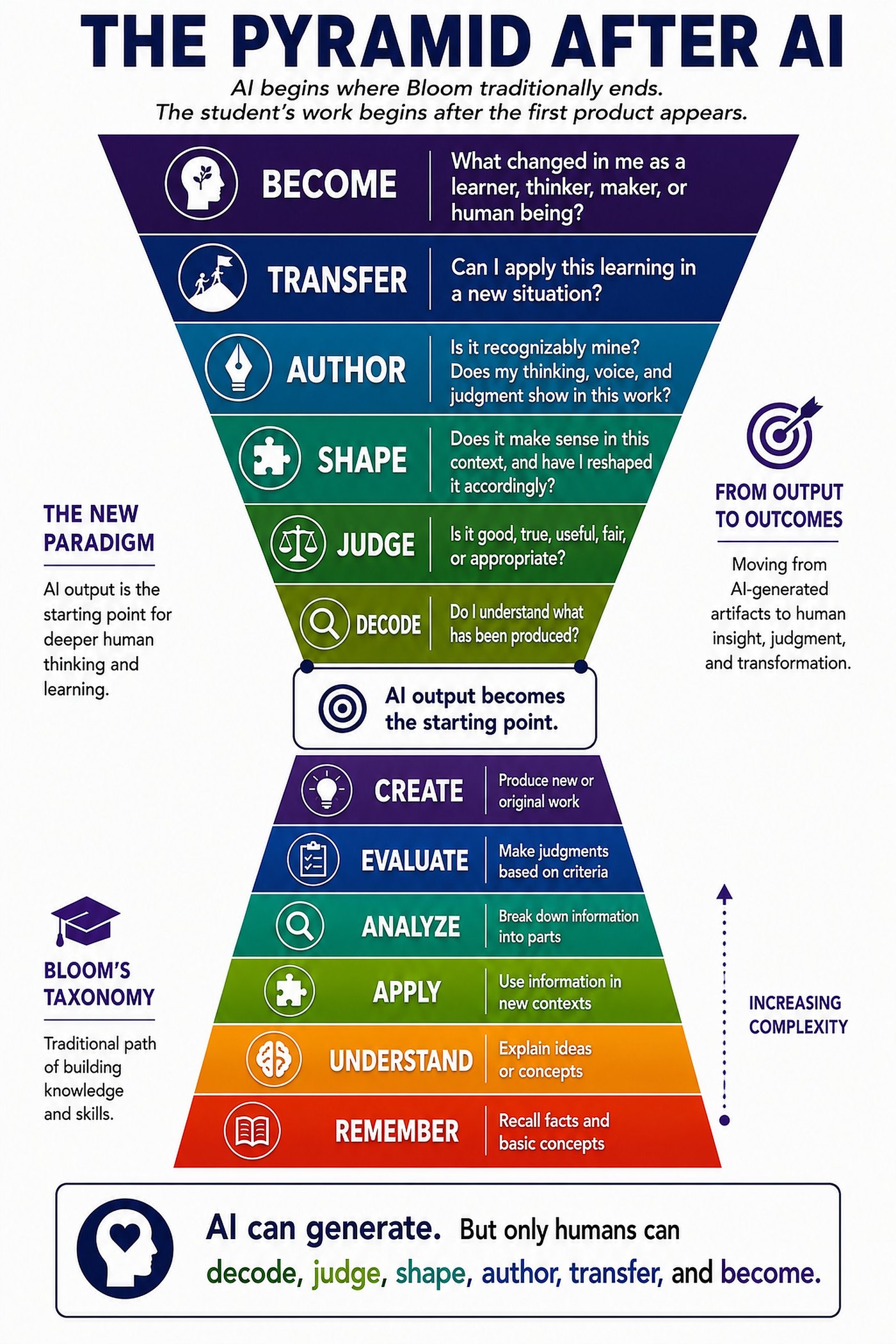
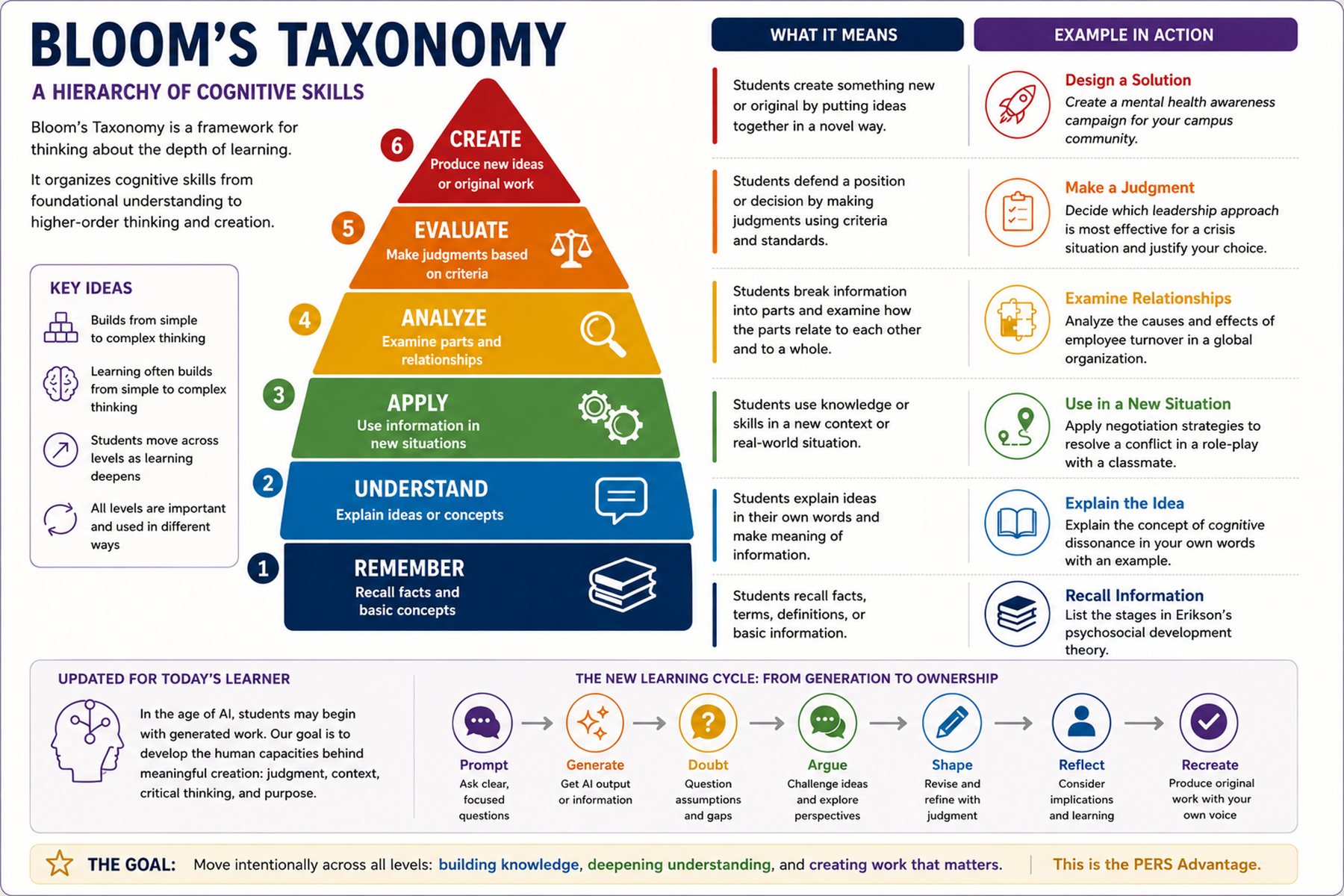
The Pyramid After AI is my answer to that problem. I drew it as an inverted pyramid above Bloom’s Taxonomy. The two shapes join at the point where AI output becomes the starting point of a student’s work. Above that point are six human capacities. Students use them in cycles and return to earlier ones as their understanding grows.
Do I understand the output?
Is it good, true or appropriate?
Does it make sense, and have I reshaped it?
Does my thinking, voice and judgment show?
Can I apply this learning in a new situation?
What changed in me as a learner or human being?
A psychology student reads an AI-generated summary of trauma research. She notices that it has merged acute and chronic trauma, a distinction that matters in clinical work. Catching that error is Decoding, and it takes knowledge the model does not have.